- About Us
- Services
- Technologies
Frontend Technologies
Database
Cross Platform Apps
Cloud Services
- Our Products
- Portfolio
- Blog
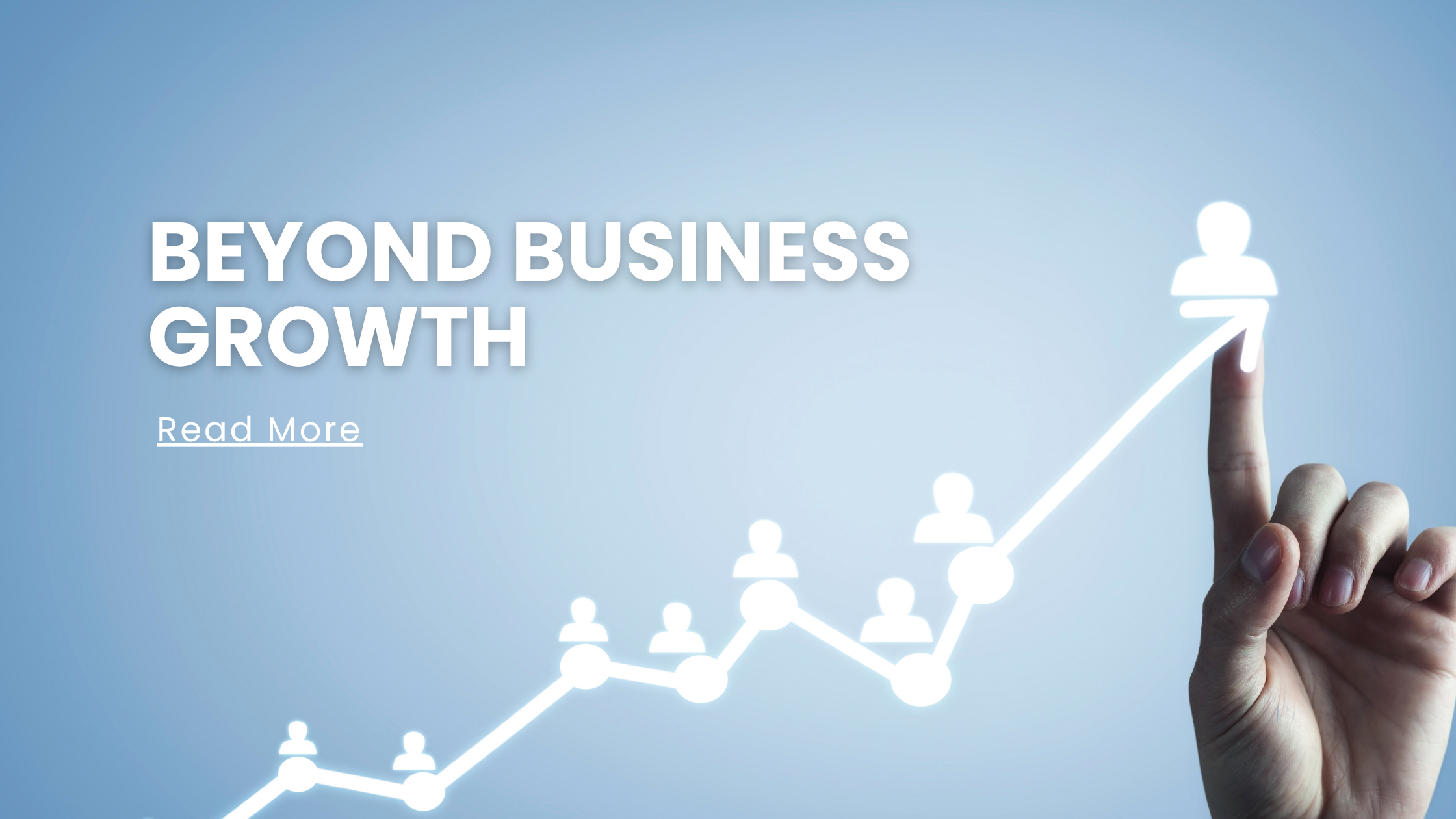
Every company’s journey includes a stage that rarely appears in growth stories. Founders talk about acquiring customers, leaders celebrate hiring milestones, and teams focus on launching products, entering new markets, and winning new business. These are the moments that reflect progress, ambition, and the excitement of building something bigger.
But somewhere between the excitement of growth and the reality of scaling, something begins to change. The tools that once made work easier start creating friction. A spreadsheet becomes five spreadsheets. A project board becomes several disconnected workflows within a growing business management system.
Customer information lives in one system, employee records in another, and operational reporting somewhere else entirely. As organizations adopt more business software to support growth, information can become distributed across multiple tools and teams.
No one notices it happening at first. After all, each new tool solves a problem.
Yet over time, businesses often discover that while they have successfully scaled their operations, they have also unintentionally scaled complexity. The question is no longer whether the business is growing. The question becomes whether the systems supporting that growth are evolving as well.
As businesses scale, many begin evaluating whether their existing Business Management Software can continue supporting growing teams, processes, and operational demands. The need is no longer just for individual tools, but for a connected business management platform that can evolve alongside the organization.
Most organizations prepare for growth by investing in the resources needed to support their next stage of success. They hire talented people, launch new services, expand into new markets, and create new opportunities for customers and teams alike. Each step helps build momentum and lays the foundation for continued growth.
With every stage of growth comes greater collaboration across departments, projects, and teams. As organizations evolve, information, decisions, and workflows naturally become more interconnected, making visibility and coordination increasingly important.
As organizations expand, information begins moving across departments, projects, customers, employees, and leadership teams. Visibility becomes increasingly important because decisions now depend on information that originates from multiple parts of the business. Teams often rely on a combination of CRM software, project management software, and employee management software to support these growing operational needs.
This is where operational challenges often begin to emerge. Not because people are less capable. Not because processes are broken. But because the systems supporting those processes were designed for a smaller organization.
As growth continues, businesses often discover that information, collaboration, and execution become more effective when supported by a connected business management platform rather than isolated tools. The ability to bring together customer data, projects, people, and workflows becomes increasingly valuable as the organization scales.
Ironically, some of the biggest operational challenges are created by success itself.
A growing sales pipeline requires stronger customer management, more projects call for better coordination, expanding teams benefit from structured HR processes, and an increasing number of stakeholders depend on accurate reporting and visibility.
To address each challenge, organizations often introduce another platform. A CRM software or customer relationship management software solution for customer relationships, a project management tool for delivery, an HRMS software solution for employee records, a communication platform for collaboration, and an analytics solution for reporting.
As sales operations mature, businesses often invest in sales CRM capabilities, lead management software, and a centralized CRM platform to manage customer interactions more effectively. At the same time, project teams adopt task management software, project tracking software, and team project management practices to improve execution and visibility across initiatives.
For growing organizations, HR requirements also become more structured. Many businesses introduce HR management software and employee management systems to support workforce operations, employee records, and organizational growth.
Each decision makes perfect sense in isolation. Collectively, however, they can create a fragmented operational environment where information becomes increasingly difficult to connect. And when information becomes fragmented, visibility suffers.
As businesses grow, so does the volume of information flowing across teams, projects, customers, and day-to-day operations.
The challenge is no longer simply accessing information. The real opportunity lies in making that information available at the right time, in the right context, and to the right people.
Leaders increasingly rely on visibility across the organization to answer important questions:
The information needed to answer these questions often already exists across the business. It may be distributed across a CRM platform, project management software, HRMS software, reporting tools, and collaboration systems. The key is ensuring it remains connected, accessible, and aligned across different functions and teams.
When customer data, projects, people, and operational insights work together within a connected business management system, organizations can spend less time gathering information and more time making informed decisions. Bringing together CRM and project management software with workforce operations creates a more unified view of the business.
As businesses continue to scale, connected operations become an important foundation for maintaining visibility, improving collaboration, and supporting sustainable growth. This is where a modern business management platform can help organizations keep people, processes, and information aligned as they grow.
For years, software adoption followed a predictable pattern. A new challenge appeared, a new tool was added, and the cycle repeated.
Today, businesses are beginning to ask a different question: What if growth doesn’t require more tools? What if it requires more connected systems?
This shift is driving interest in all-in-one business management software and modern business management platforms that bring together critical operational functions under one environment. Rather than managing separate islands of information, organizations are looking for a unified business management system where customer management, project delivery, workforce management, collaboration, reporting, and automation work together seamlessly.
As a result, many growing businesses are moving toward integrated solutions that combine CRM software, project management software, and HRMS software into a single connected experience. The goal is not simplification for the sake of simplicity. The goal is reducing operational friction, improving visibility, and creating a more effective foundation for growth through smarter business software.
Artificial intelligence is accelerating this transformation. Businesses are already using AI to automate repetitive tasks, generate reports, assist with planning, and improve decision-making. As a result, AI business management software and modern AI business software are becoming an increasingly important part of business operations.
Yet AI depends on context. When information is spread across disconnected systems, AI can only see part of the picture. When operations are connected, AI can deliver more meaningful insights and recommendations.
This is where AI business automation, AI CRM, and AI project management create greater value. Combined with the benefits of AI productivity software, these capabilities help organizations work more efficiently while reducing manual effort.
The future of business software will not be defined by AI alone, but by how effectively AI works alongside connected business operations.
Organizations regularly evaluate strategy, review budgets, optimize processes, and assess team performance. Far fewer evaluate whether their software ecosystem is evolving at the same pace as their business.
Yet this question may become one of the most important factors in long-term success. As businesses grow, complexity naturally increases, making connection and visibility more important than ever.
The organizations that scale most effectively are often those that invest in systems that grow alongside them. Whether it’s a CRM platform, employee management system, or an integrated business management system, the goal is not simply to store information but to help people work better together.
Growth should create momentum, not confusion. It should improve visibility, not reduce it, and empower teams to focus on meaningful work instead of navigating disconnected processes and fragmented information.
As businesses continue to evolve, the challenge is no longer finding software to solve individual problems. The challenge is creating an environment where people, projects, customers, and decisions remain connected as the organization grows.
This is why more organizations are adopting business management software that brings together CRM software, project management software, HRMS software, and AI-powered capabilities in a single connected experience. The goal is not simply to manage work, but to create a foundation that helps teams collaborate more effectively, improve visibility, and scale with confidence.

4332 Jeker Dr.
Plano, TX 75074
(469) 888-0495
info@ginilytics.com
Book a no obligation session with one of our consultants. Someone will be in touch with you within one business day.
Book a no obligation session with one of our consultants. Someone will be in touch with you within one business day.